
Capital Cooking on Gordon Ramsay’s Food Stars
Capital ranges are a featured appliance in Gordon Ramsay’s Food Stars on FOX TV and Hulu.

International celebrity chef and star of the MasterChef series programs Gordon Ramsay is launching a culinary business competition show, titled Gordon Ramsay’s Food Stars. This brand new culinary endeavor will premiere on FOX, and the Capital range is set to be a featured cooking appliance in the series.
“Affiliating the Capital brand with a top-tier celebrity chef like Gordon Ramsay is a big opportunity to build our brand credibility and overall exposure,” states Art Valentine, Executive Vice President of Capital’s parent company SES. “The show specifics are still in the works, but we are excited to be a part of it.”
More on Gordon Ramsay’s Food Stars: This new and exciting culinary business competition show features Gordon Ramsay in a way you’ve never seen him before! 14 entrepreneurs enter this competition vying for a $150k investment by Gordon, and these would-be investees come from a variety of businesses in the culinary world. From restaurateurs, to food brand owners, to drink moguls, to kitchen innovation creators, the competition field is expansive!
Working in teams, pairs, or as individuals, each week Gordon will introduce unique challenges to contestants. From culinary chops and kitchen performance, to intense negotiations, creativity, marketing strategies, budgeting, and leadership skills, these contestants will face a gauntlet of business-themed challenges designed to test a wide range of expertise. In order to stay in the competition (and ultimately acquire Gordon’s investment!), they’ll need to prove they’re a financial force to be reckoned with, or risk elimination under his notoriously high standards.
Alongside Gordon, he’ll be joined each week by special guests who have ties to each challenge, including VIPs and CEOs of some of the biggest culinary companies. Needless to say, the contestants will have no shortage of A-level mentorship throughout the series. Over the course of 10 episodes filmed in locations throughout the US, who will prove to Gordon they have what it takes to earn his investment and become the ultimate Food Star?
Gordon Ramsay’s Food Stars premiered on May 24, 2023. Stream it now on FOX TV and Hulu!
Capital Cooking and Mercedes Benz
“The Connoisseurian is a masterpiece of engineering”
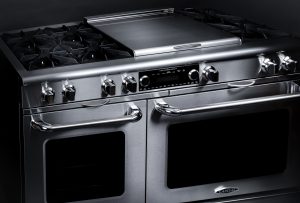
Capital Cooking’s Connoisseurian range received a sensational review in a recent publishing of the Mercedes Benz lifestyle blog eMercedes-Benz.com. This detailed article praises the appliance as “the ultimate professional home range.”
Regarding the Capital Connoisseurian design and build quality, author/chef Tori Jones states: “Designed and built in the United States, Capital ranges’ build quality is impeccable. I owned my Culinarian for 10 years, and not only did it perform flawlessly, its looks matched its performance a decade later. It’s evident Capital uses the highest quality materials to build their ranges, and the build quality of the Connoisseurian has only gotten better. There wasn’t a single flaw with my range – not a scratch, every weld was perfect, every knob, every burner – everything functioned perfectly from the start, and six months later I’ve yet to find a fault with it. Capital ranges are beautifully built, to the point you could use them in a commercial kitchen and they could withstand the punishment.”
Jones found the open burner design on the range particularly impressive: “In a word, the open burners on the Connoisseurian are incredible. I never thought I needed such high BTU’s prior to owning a Capital, but now that I have so much power at my disposal, I find myself using the highest heat settings weekly, usually when wok cooking. Thanks to an available wok ring that replaces the standard burner grate, cooking with a wok on the Connoisseurian is brilliant, as the ample heat allows a genuine smoky flavor to permeate the food. I also use high heat when searing meats, prior to cooking at lower temps in the oven. Some debate the need for such high heat, but I’ll tell you firsthand that if you’re truly serious about cooking at the highest possible level, there’s simply no way to get the same results with less power.”
Read the full article here:
Capital Cooking and Simon Kim
Michelin Star restaurateur Simon Kim chooses Capital for his personal residence.
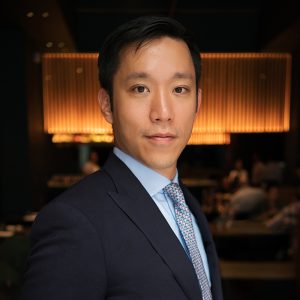
Simon Kim, owner of the Michelin Star restaurant COTE in NYC and Miami, has selected Capital Cooking’s Connoisseurian range for his personal residence. He will be serving as a spokesperson for the brand using his social media channels, and will incorporate video segments, photography, and testimonials.
“COTE New York has received a star from the Michelin Guide each year since opening in 2017, and it is the only Michelin-starred Korean barbecue restaurant in the world” states Art Valentine, Executive Vice President of Capital’s parent company SES. “We are honored that he would choose a Capital range for his home and be so willing to speak to the quality craftsmanship and performance of our products. He is a reputable name and influencer within the east coast foodie circles, and this partnership with Mr. Kim will help to enhance our brand recognition.”
Kim’s original “Korean Steakhouse” concept combines Korean barbecue with an American steakhouse experience and was inspired by his Korean-American heritage. Crain’s New York named Kim as one of their “40 Under 40” business leaders in 2019. In 2021, the National Restaurant Association, which represents 1 million restaurant and foodservice outlets and a workforce of 15.6 million employees, elected Kim to serve on their board.
Check out Simon’s spotlight on his new range here, and find him on Instagram @Cote_NYC and @SimonKimNYC
Capital Cooking and “The Big Brunch” Series
Capital’s Cullinarian Range is Chosen for HBOMax Cooking Competition

Last May, Emmy-winning actor and showrunner Dan Levy launched a new cooking reality competition with HBOMax. Levy, best known for his hit sitcom “Schitz Creek”, is both the host and creator of “The Big Brunch”, where competitors fight for a life-altering prize and work to redefine what it means to dine between 11AM and 3PM. Capital Cooking struck a deal with the show to be the featured range that the competitors cooked with.
“This was a very exciting opportunity for our Capital ranges to be used in a cooking competition series with an exceptionally large viewership,”stated Art Valentine, Executive Vice President of Capital’s parent company SES. “ The HBO Max audience is now over 80 million, and giving these viewers the chance to see just how well Capital ranges perform in real time is sure to significantly increase our brand awareness and credibility.”
“Everybody has a friend, a family member, or a co-worker that is extraordinary at what they do, they just need a leg up so that their talents can be appreciated on a larger scale.” said Levy in a statement. “I created this show for them, the local culinary heroes of America whodeserve a spotlight. That, and who doesn’t want to watch maple syrup being poured slowly over a golden stack of perfectly cooked, creme brûlée-inspired French toast?”
The series premiered in December of 2022 to positive reviews and high acclaim.